
Why your windows are wet, when it is normal, and what to do before the mould appears.
Last updated: 18 October 2026
Short answer: condensation on windows is normal in cold weather. It becomes a problem when it happens every morning, soaks the frames and curtains, or starts producing black mould. The fix is not a better cloth. It is reducing moisture and improving ventilation.
If you wake up to misted glass and water running down the frames, you are not alone. British homes are particularly prone to it: older housing stock, single glazing, small rooms and wet winters all contribute. In a rented flat, the problem can turn into a repair dispute if nobody deals with the cause.
This guide explains what is happening, how to tell ordinary condensation from a building defect, and what actually works.
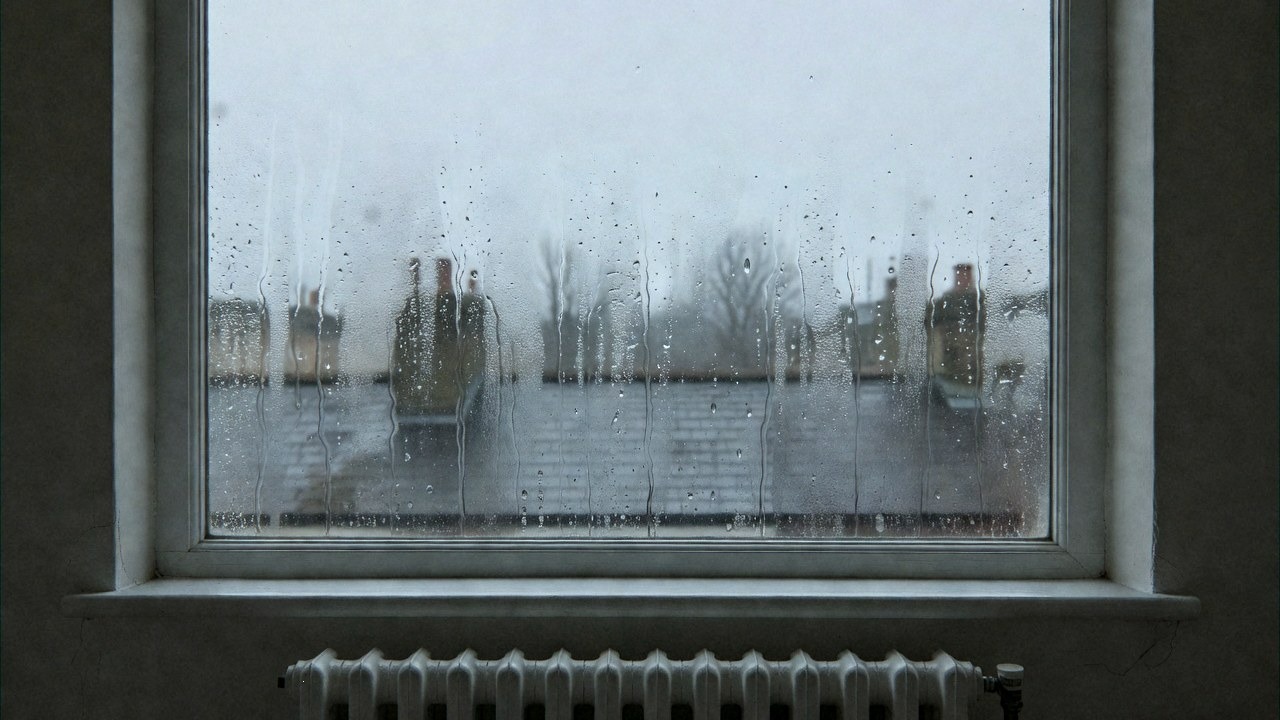
What is condensation?
Air contains water vapour. The amount it can hold depends on temperature. Warm air holds more; cold air holds less. When warm, moist air touches a surface that is colder than the air’s dew point, the vapour condenses into liquid water.
On a winter morning, the glass is usually the coldest surface in the room. Water appears there first. The same thing happens on external walls, mirror tiles, metal window handles and the inside of wardrobes pushed against a cold wall.
Condensation is not a sign that your home is dirty. It is a sign that moisture is being produced faster than it can escape.
Where the moisture comes from
A typical household produces a surprising amount of water vapour every day:
- Breathing and perspiration from two adults: around 1 to 2 litres.
- Cooking: around 0.5 to 1 litre per meal, more if you boil potatoes or pasta without a lid.
- Showering: around 0.5 litre per shower.
- Drying laundry indoors: around 1 to 2 litres per load.
- Washing up, mopping floors and watering plants: smaller amounts, but they add up.
In a small, well-sealed flat, that moisture has nowhere to go. It builds up overnight, hits the cold glass, and by morning the windows are running.
Is it normal or a problem?
Some condensation is normal. A little mist on the glass in winter, gone by mid-morning, is not a defect.
It becomes a problem when:
- Water pools on the sills or runs down the wall.
- Curtains, blinds or bedding near the window feel damp.
- Paint or wallpaper starts to blister.
- Black spots appear in the corners of the frame or on the surrounding wall.
- The musty smell does not go away when the room is aired.
At that point, the moisture is affecting the building and creating conditions for mould.
Condensation or something else?
Not every wet patch is condensation. Check the pattern.
Condensation usually appears on the coldest surfaces, often across the whole window, and is worse in the morning after a cold night. It dries during the day when the room warms up.
Penetrating damp appears as a localised patch, often after rain, with a tide mark or discoloured edge. It may be on one wall rather than across the window.
Rising damp affects the bottom of ground-floor walls and often leaves white salt deposits.
If the water only appears on the glass and disappears when the room warms, it is condensation. If it appears after rain or stays in one patch, investigate the building.
Why it keeps coming back
Most condensation advice focuses on wiping the windows. That deals with the symptom, not the cause. The water will return the next night unless the balance between moisture and ventilation changes.
There are four levers you can adjust:
- Produce less moisture. Put lids on pans, dry laundry outside or in a tumble dryer vented outdoors, take shorter cooler showers, and keep bathroom doors closed while showering.
- Remove moisture at source. Use the extractor fan in the bathroom and kitchen. Leave it running for 10 to 15 minutes after you finish.
- Ventilate the whole home. Open windows for a few minutes in the morning and evening, even in winter. Keep trickle vents open. Do not block air bricks.
- Keep surfaces warmer. A steady background temperature reduces cold spots. This is not about overheating the home; it is about avoiding sharp temperature drops.
A window vac or a dry cloth helps in the short term, but it is not a fix.
Do extractor fans and trickle vents actually work?
When they are working, yes. When they are blocked, undersized or switched off, no.
Check the extractor fan by holding a piece of tissue near the grille. If it is not held against the grille, the fan is weak or blocked. Clean the grille, check the ducting, and make sure the fan is not on a timer that switches off after two minutes.
Trickle vents above windows are often painted shut or deliberately closed to keep out cold air. They are there to provide background ventilation without draughts. Keep them open.
If you rent, report faulty extraction and blocked vents to your landlord. A home without effective ventilation is more likely to develop damp and mould, and that can become a repair issue.
When the building is the problem
Sometimes the tenant does everything right and the windows still run. Look for these building issues:
- Failed double glazing. If the seal has gone, the cavity fogs up from the inside and cannot be cleaned.
- Cold bridging. A concrete lintel, metal frame or uninsulated wall creates a cold strip where condensation collects.
- Blocked or missing cavity wall insulation. Cold walls attract condensation.
- Leaking gutters or roof. Water gets into the wall and adds to the moisture load.
- Inadequate heating. A flat that is never warmed stays cold and damp.
These are landlord repairs, not tenant lifestyle issues. The government’s guidance on damp and mould is explicit that landlords should not dismiss the problem as condensation caused by the tenant without investigating the building.
What to do this week
- Wipe the windows each morning and dry the sills.
- Keep trickle vents open and use the extractor fans.
- Stop drying laundry in the room where the condensation is worst, or ventilate that room while drying.
- Pull furniture and curtains away from cold walls.
- Check the humidity with a cheap hygrometer. Aim for roughly 40% to 60%.
- Photograph any mould that appears and report it in writing.
If black mould has already appeared, clean small patches with a fungicidal wash and proper protective equipment. For anything larger than about one square metre, or anything that keeps returning, ask the landlord to investigate the cause.
For the difference between condensation, penetrating damp and rising damp, read our guide to black mould vs damp. For the full tenant process, see black mould in rental homes.
Frequently asked questions
Is condensation on windows in winter normal?
Yes, a little is normal. It becomes a problem when it is heavy, persistent or leads to mould.
Does double glazing stop condensation?
It reduces it by keeping the inner pane warmer, but it does not eliminate it. Poor ventilation and high moisture levels can still cause condensation on modern windows.
Should I leave windows open in winter?
Short bursts of ventilation are better than leaving them open all day. Open them for a few minutes in the morning and evening, and keep trickle vents open.
Why is my bedroom window wet but not the others?
Bedrooms often have more occupants, less airflow and colder surfaces. Breathing overnight adds moisture, and closed doors reduce circulation.
Can condensation cause black mould?
Yes. Persistent condensation keeps surfaces wet, and mould grows on damp surfaces. The mould usually appears in corners, on frames and behind curtains first.
Will a dehumidifier fix it?
It can help in a flat, especially in a room used for drying laundry, but it is not a substitute for ventilation and fixing leaks. Choose a unit sized for the room and empty it regularly.
Sources and further reading
- Damp and mould: understanding and addressing the health risks, GOV.UK: https://www.gov.uk/government/publications/damp-and-mould-understanding-and-addressing-the-health-risks-for-rented-housing-providers
- English Housing Survey 2024-25, GOV.UK: https://www.gov.uk/government/statistics/chapters-for-english-housing-survey-2024-to-2025-headline-findings-on-housing-quality-and-energy-efficiency/introduction-and-key-findings
- Shelter England, repairs and fitness for habitation: https://england.shelter.org.uk/housing_advice/repairs
- WHO guidelines for indoor air quality: dampness and mould: https://www.who.int/publications/i/item/9789289041683
This article is general information, not legal advice.